
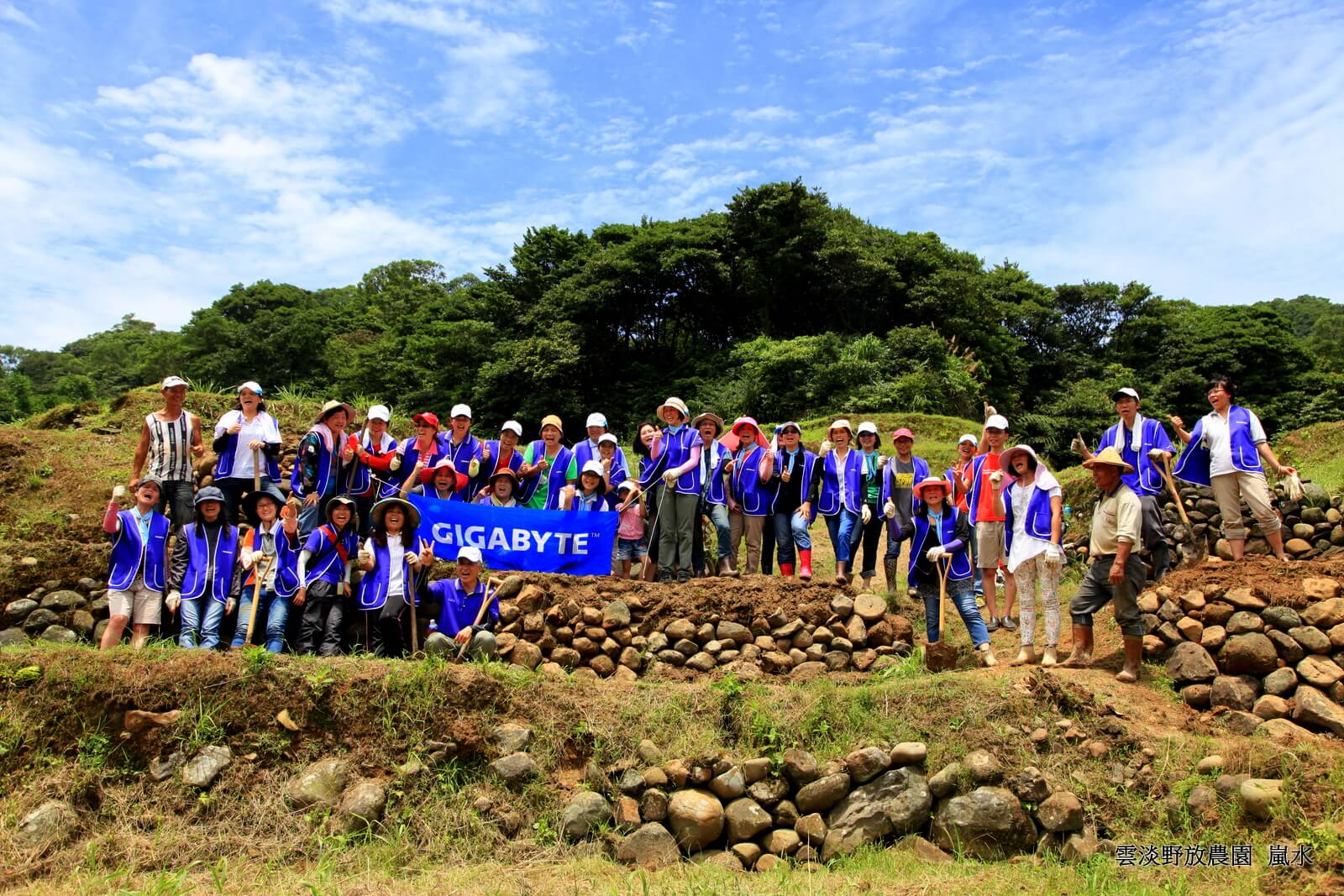
A working holiday was organized in Spring with the Shimensongshan Community on the north coast. Participants had the opportunity of learning how traditional stone terraced fields were built and helping the old farmers with maintaining the field embankments. During the process, members gained an understanding of the traditional farming methods typical at the northern coast, the economic and historical background of water rice terraces, as well as agriculture issues that farmers currently face in Taiwan.
Apart from learning through rural labor, we chose water terraced fields in the shallow mountain region as the location of the holiday. Their unique geography and eco-friendly farming practices that shun the use of chemical fertilizers and pesticides helped nurture an environment rich in bio-diversity. The local settlement is of both cultural and ecological significance so conforms to the definition of the “Satoyama Landscape” proposed by Japan at the Conference of the Parties to the Convention on Biological Diversity. This complex farm village ecosystem was formed by long-time interaction between human activity and natural forces. It is therefore of tremendous heritage value as an example of how biodiversity can be balanced with sustainable use of resources.