
Identification of Material Topics
The Sustainability Report serves as an important channel for GIGABYTE to communicate our sustainability management practices and performance to stakeholders. The materiality analysis process helps to identify the sustainability topics that should be disclosed in the Sustainability Report. A materiality analysis is conducted by GIGABYTE each year in accordance with the GRI Standards 2021. Sustainability topics are periodically updated based on international sustainability standards and trends, the Companyʼs business goals, as well as the material topics of benchmark enterprises and peers. Investigation of stakeholder concern on sustainability topics as well as analysis of how sustainability topics impact on operations and sustainable development are used to rank material topics for the year. The disclosure of related information is also prioritized in the Sustainability Report. The double materiality approach was adopted in 2025 to investigate and analyze the business impact of sustainability topics more closely, as well as the positive and negative impacts on the economy, environment, society, and human rights.
Click here to join the survey and provide your concerned topics about GIGABYTE
Identification Process of Material Topics
Sustainability Issue Impact Assessment
GIGABYTE assesses the impact of various sustainability issues on the companyʼs operations and further references the “OECD Well-being and GIIN IRIS+” impact indicators to evaluate the impact of these issues on the sustainability of the value chain (including supply chain, customers, environment, people/human rights). Governance-related indicators include trust, property damage, favorability/satisfaction, and potential changes in market competitiveness; Environmental indicators include property damage and carbon costs; People/Human Rights indicators include turnover rate, job satisfaction, health impacts, and community relations. The results of the double materiality analysis serve as a reference for implementing various management measures.
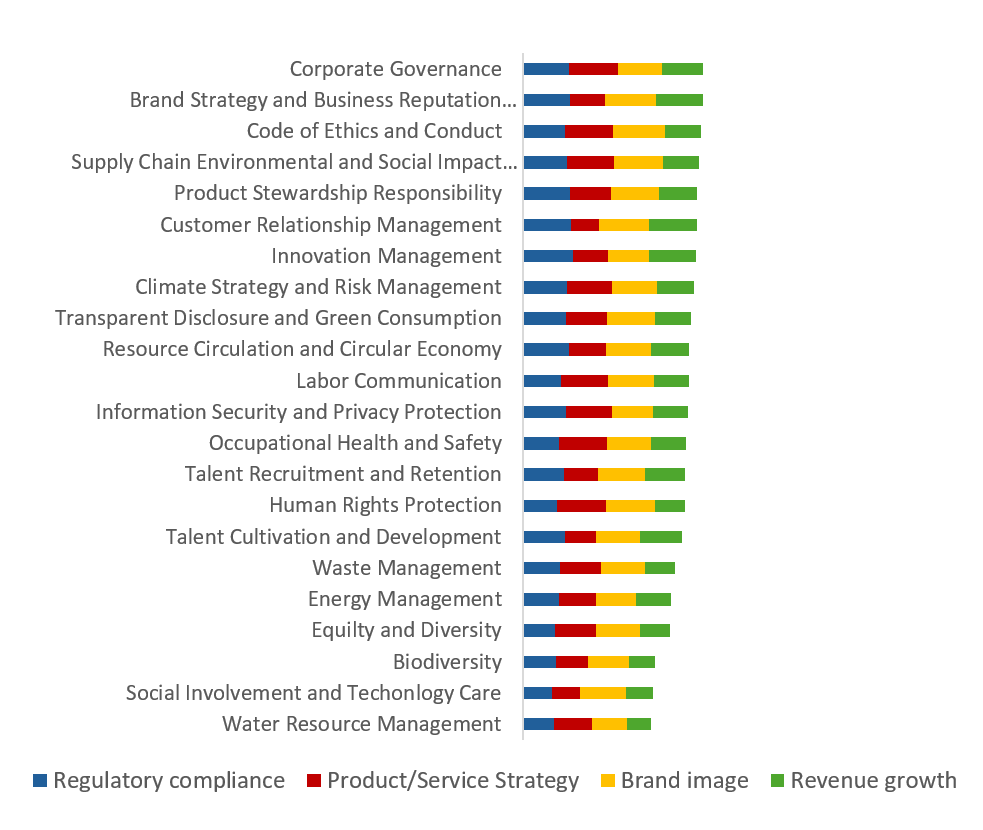
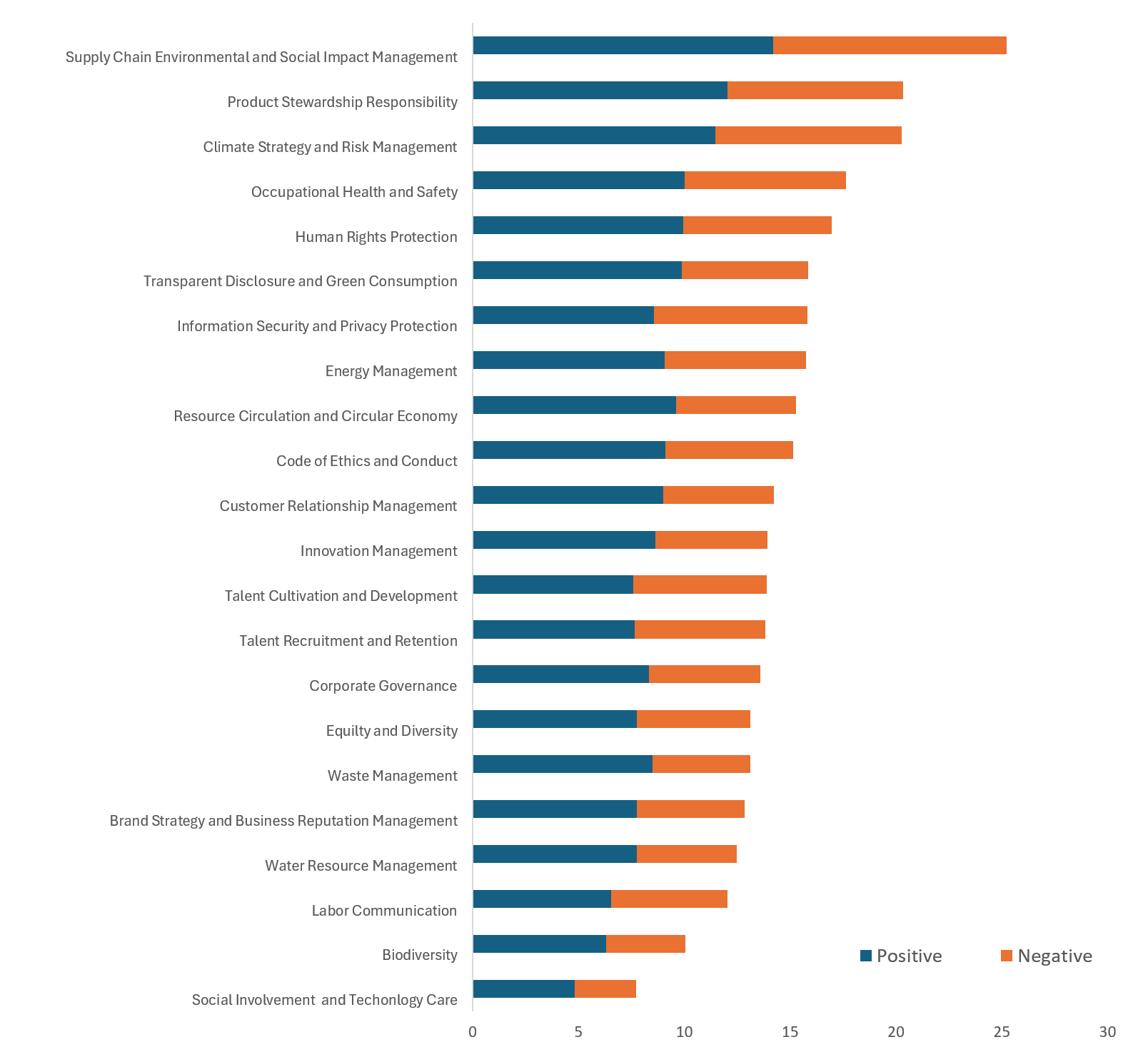
Note: Sustainability impacts are measured using impact indicators from the “OECD Well-being” and “GIIN IRIS+” frameworks
- Governance: Trust, Property Loss, Favorability/Satisfaction, Market Competitiveness
- Environment: Property damage, carbon costs
- People/Human Rights : Turnover Rate, Job Satisfaction, Health Losses, Neighborhood Relations
GIGABYTE Material Topics
| Corporate Governance | Stakeholder Attention |
Impact on GIGABYTEʼs Operation | Impact on Sustainability | Rank |
|---|---|---|---|---|
| Governance | ||||
| Code of Ethics and Conduct | ●●●● | ●●● | ●●● | 6 |
| Information Security and Privacy Protection | ●●●● | ●●● | ●●● | 8 |
| Corporate Governance | ●● | ●●● | ●● | 12 |
| Economy | ||||
| Supply Chain Environmental and Social Impact Management | ●● | ●●● | ●●●● | 1 |
| Customer Relationship Management | ●●● | ●● | ●●● | 9 |
| Innovation Management | ●●●● | ●●● | ●● | 11 |
| Environmental Sustainability | ||||
| Product Stewardship Responsibility | ●●● | ●●● | ●●●● | 2 |
| Climate Strategy and Risk Management | ● | ●● | ●●●● | 3 |
| Transparent Disclosure and Green Consumption | ●● | ●●●● | ●● | 7 |
| Resource Circulation and Circular Economy | ● | ●● | ●●● | 10 |
| People/Human Rights | ||||
| Occupational Health and Safety | ●●●● | ●●● | ●●●● | 4 |
| Human Rights Protection | ●●●● | ●● | ●●●● | 5 |
| Talent Recruitment and Retention | ●●● | ●●● | ●● | 14 |
| Talent Cultivation and Development | ●●● | ●●● | ●● | 15 |
Material Topics and Impact Boundaries
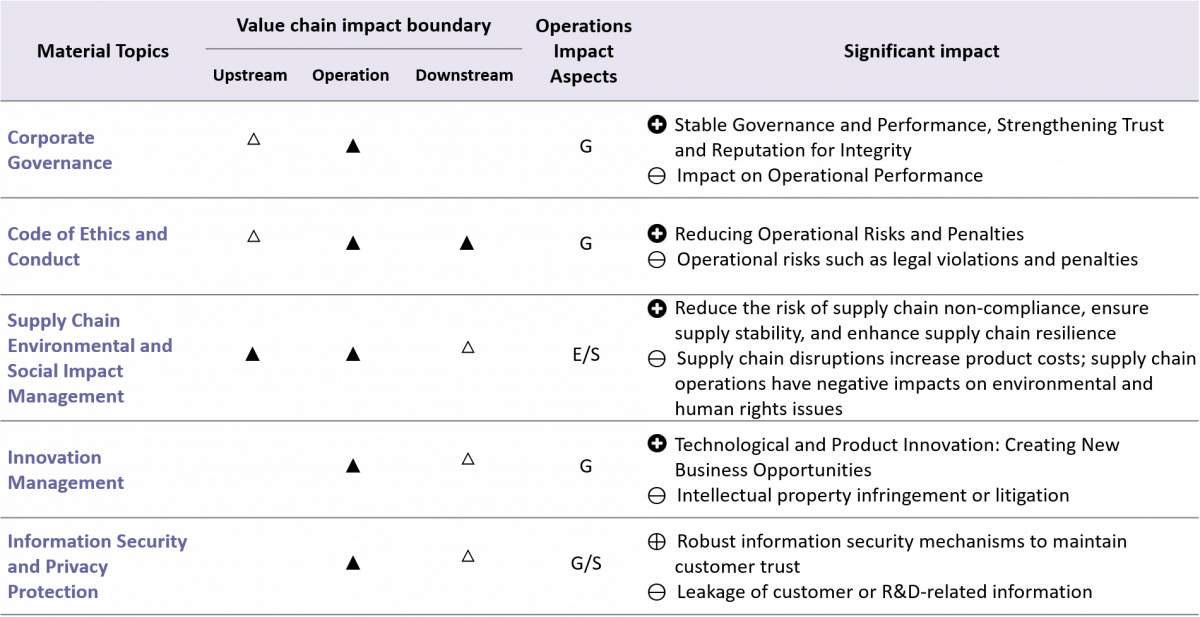
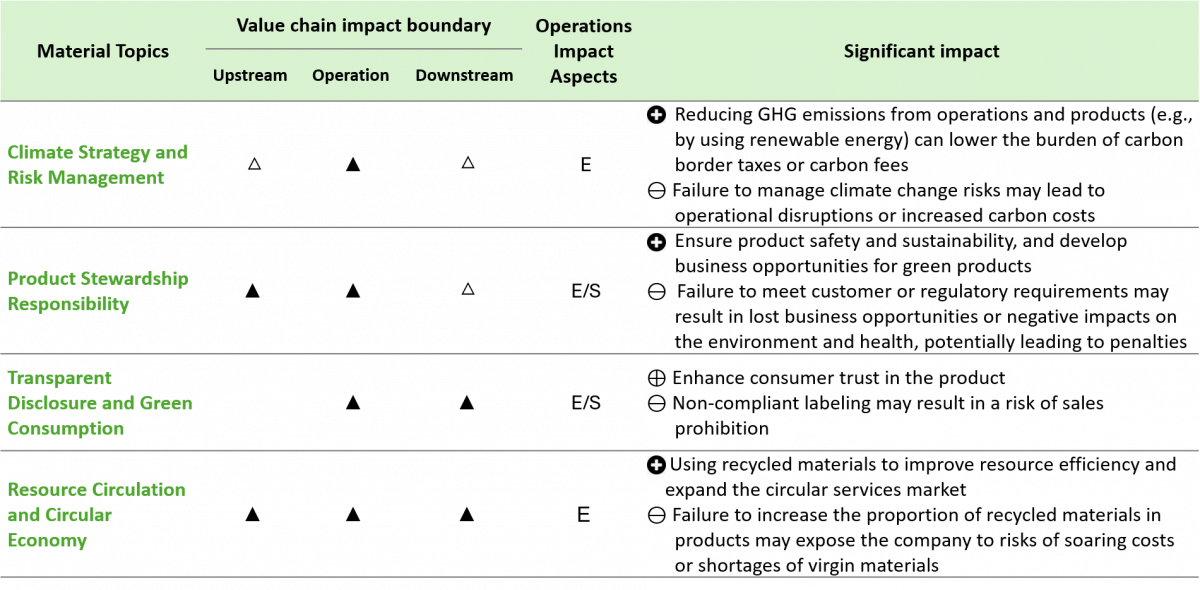
To help stakeholders understand the impacts of each material topic on the company, the overall value chains, the environment, and society, we elaborate a matrix table to present the direct impacts and indirect impacts each material topic may cause.“▲” means direct impacts indicating that the material topic has a direct impact on that boundary. “△” means indirect impacts indicating that the material topic has an indirect impact on that boundary, or is linked to that boundary for commercial reasons. Impacts were also broken down into categories “potentially positive ⊕”, “potentially negative Θ”, “actually positive  ”, and “actually negative
  ”.
”.
Corporate Governance
Environmental Sustainability
People / Human Rights
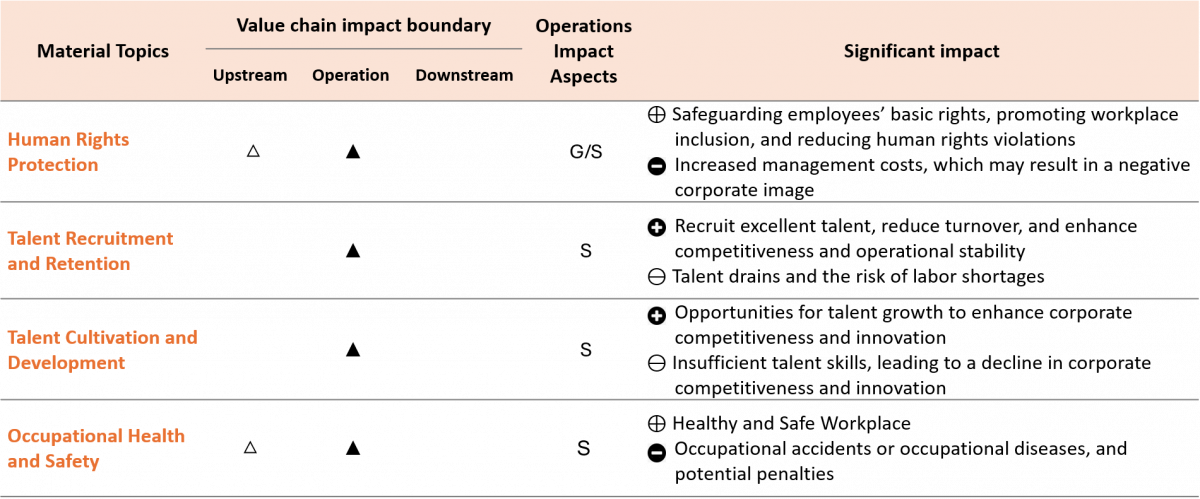
Material Topic Management and Outcomes
| Material Topics | Responding Chapter in 2025 Sustainability Report |
|---|---|
| Corporate governance | 2.1 Corporate Governance Structure |
| Code of Ethics and Conduct | 2.2 Code of Ethics and Conduct |
| Innovation Management | 2.5 Innovation Management |
| Customer Relations Management | 2.6 Customer Relationship Management |
| Supply Chain Environmental and Social Impact Management | CH4 Sustainable Value Chain |
| Climate Strategy and Risk Management | 3.2 Climate Change Mitigation and Adaptation |
| Information Security and Privacy Protection | 2.4 Information Security and Privacy Protection |
| Product Stewardship Responsibilities | 3.4 Product Stewardship Responsibility |
| Transparent Disclosure and Green Consumption | 3.4.6 Disclosure of Product Environmental Impact |
| Resource Circulation and Circular Economy | 3.4.1 Product Raw Material Management 3.4.4 Product Packaging Management 3.5 Circular Economy |
| Human Right Protection | 5.1 Human Right Protection |
| Talent Attraction and Retention | 5.2.3 Talent Recruitment and Retention |
| Talent Cultivation and Development | 5.2.4 Talent Cultivation and Development |
| Occupational Health and Safety | 5.3 Occupational Health and Safety |