Environmental Management System
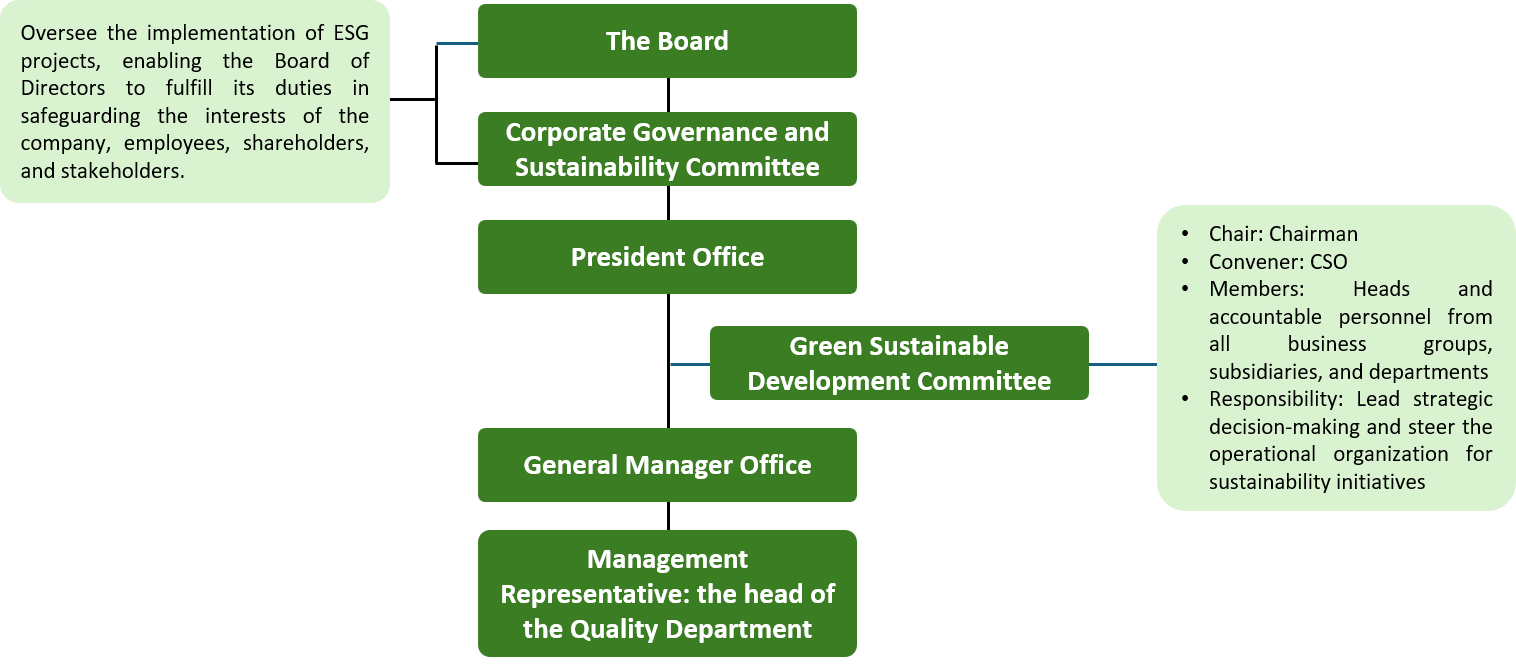
GIGABYTE is committed to reducing the environmental impact of operations and manufacturing processes as well as protecting the health and safety of our employees as part of commitment and promise on environmental management. To enhance management effectiveness, we have implemented the ISO 14001 Environmental Management System, ISO 50001 Energy Management System, IECQ QC 080000 Hazardous Substance Process Management System, and ISO 14064-1 Organizational GHG Inventory Mechanism. Additionally, the General Manager has appointed the head of the Quality Department to serve as the Management Representative, responsible for establishing, implementing, and maintaining the quality and environmental, health, and safety management systems. The company also regularly commissions third-party organizations to conduct audits and certifications to ensure the effectiveness and continuous improvement of these management systems.
At the same time, GIGABYTE implements the 5S management mechanism to strengthen order and safety in operational spaces through the five key aspects of Sorting (Seiri), Setting in Order (Seiton), Shining (Seiso), Standardizing (Seiketsu), and Sustaining (Shitsuke). In addition to training dedicated auditors, the company implements a “Monthly Internal Audit Plan” to strictly monitor compliance with waste management, energy safety inspections, and waste sorting. Through data-driven management and regular review meetings, GIGABYTE fulfills its commitment to high-quality and high-safety environmental management. Through its deep commitment to Green Production, GIGABYTEʼs Nanping Factory passed the “Clean Production Assessment System” audit conducted by the Industrial Development Administration of the Ministry of Economic Affairs in 2025. Furthermore, no material environmental violations (resulting in fines exceeding NT$1 million) occurred in 2025.
-
Management Policy: Environmental Policy、Energy Management Policy、Water Stewardship Commitment、Hazardous Substance Control Guidelines
Implementation of Environmental Management Systems at Major Operational Sites
| Management System | Coverage Rate | Headquarters | Nanping Factory | Silicon Valley Office | Dongguan Factory | Ningbo Factory |
|---|---|---|---|---|---|---|
| ISO 14064-1 | 89.56% | V | V | V | V | V |
| ISO 14001 | 88.94% | V | V | V | V | |
| ISO 50001 | 88.94% | V | V | V | V | |
| IECQ QC 080000 | 100% | V | V | V | V | V |
Note 1: Coverage rate is calculated as the proportion of revenue generated by major operating locations relative to consolidated revenue
Note 2: All environmental management systems have been verified by third parties. For relevant certificates and statements, please refer to the “Resource Hub“
Environmental Management Targets
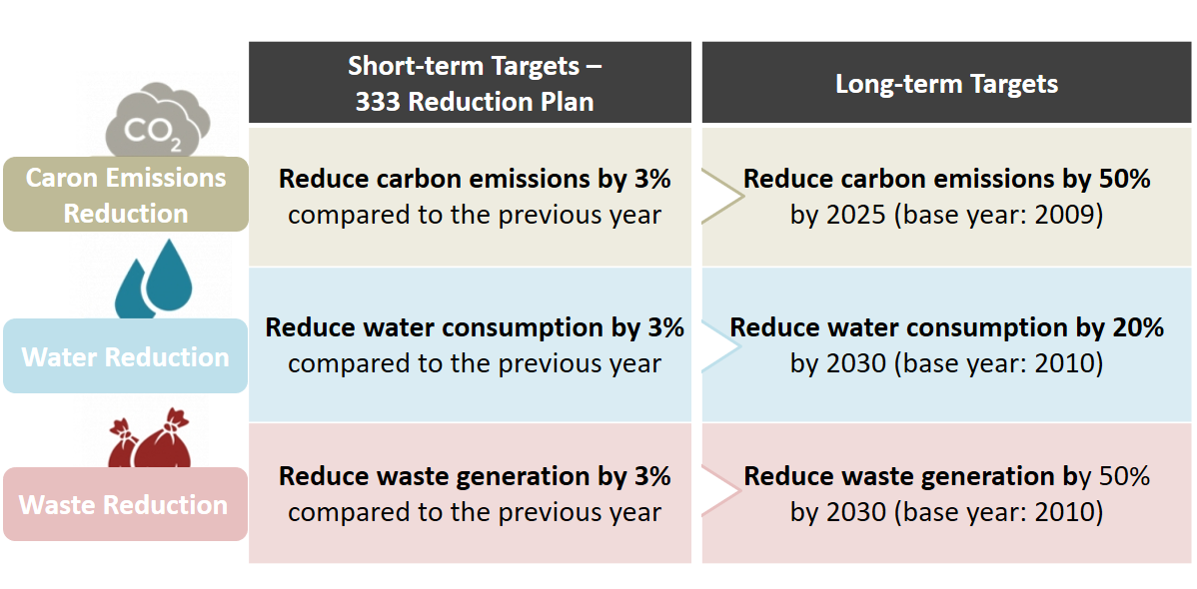
GIGABYTE began introducing long-term reduction plans for carbon, water, and waste in 2009. The “333 Reduction Plan” set a phased target of reducing carbon emissions, water consumption, and waste by 3% every year. This not only supported the mission of “Reduction” from phase 1 of Green Action Plan 2.0 but also ensured the realization of long-term goals while minimizing impact to operations. At the same time, through initiatives such as reduction incentive programs and green competitions, employees are encouraged to develop personal habits of saving energy and water, and to actively participate in the research and development of green and energy-efficient products.
GIGABYTE Reduction Target
Progress of Reduction Targets and Implemented Actions
| Target | Reference webpage |
|---|---|
| GIGABYTEʼs progress of reaching short- and long-term targets | CSR Performance-Environmental Aspect |
| GIGABYTE emissions reduction pathway and responding measures to climate change | Climate Strategy and Risk Management |
| Reduction performance of the “Reduction. Sharing. Love the Earth” Alliance | Tetralogy of Supply Chain Engagement |
Environmental Management Measures
GIGABYTE deeply agrees that corporate operation and the environment are interdependent. A company cannot survive if the environment is severely destructed. In view of that, we draw up various measures that aim to be truly beneficial to the environment, such as improving energy and resource efficiency, striving to develop friendly products, promoting green consumption, etc. At the same time, multiple energy-saving and emission-reduction practices are implemented in life to encourage employees to be concerned with the integrated concept of ecosystem, life, and production. Through internal environmental management, supplemented by raising the awareness of environmental protection among employees, we hope to become a truly green enterprise.
Sustainability Fund and Reduction Reward Program
GIGABYTE launched the “Sustainability Fund” program in 2019. The fund is sourced from annual energy-saving costs and is used to promote energy conservation, waste reduction, and low-carbon product proposals within the factory premises, as well as other sustainability-related initiatives. It provides employees with incentives and motivation for fostering innovative thinking and green design to achieve the companyʼs reduction goals. A total of 85 employees participated in the 12th proposal round in 2025, submitting 32 reduction proposals. Among these, 32 proposals focused on carbon reduction, 23 on electricity savings, and 15 on waste reduction. After review, awards were granted based on the significance of the reduction scale, feasibility, and proposal quality. Leverage energy-saving incentive mechanisms and evaluate employee engagement to award carbon reduction bonuses and integrate them into performance appraisals. Outstanding reduction proposals will be implemented in the workplace, and their implementation status will be continuously monitored.
Reduction Proposals and Performance In the Past Years
| Time Proposed | Electricity Savings (kWh/year) | Water Savings (Tones/year) | Waste Reduction (kg/year) | Carbon reduction (kg- CO2e/year) |
| 2019-2025 Cumulative Total |
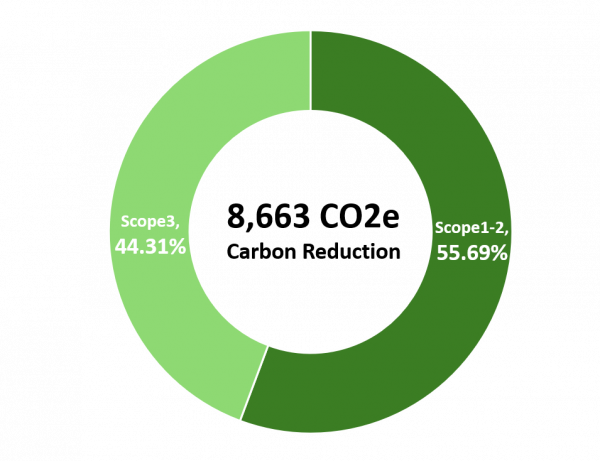
9,488,726 | 32,657 | 739,437 | 8,663,799 |
As of the end of 2025, the reduction and low-carbon product proposal reward program has been held for 12 sessions, accumulating a total of 412 innovative reduction proposals. The review employs the “shadow pricing” concept for internal carbon pricing to quantity reduction performance. Carbon was therefore priced at USD 50 per ton.
Proposals in 2025 primarily focused on equipment energy efficiency, reduction of parts/consumables, and resource recycling. Scope 1 and 2 carbon reduction proposals accounted for 50.41%, mainly involving operational process improvements (such as automated monitoring and optimized jigs) and equipment upgrades; Scope 3 proposals accounted for 49.59%, primarily involving initiatives such as the recycling and reuse of packaging materials. Among these, some involved collaboration between the factory and suppliers to reduce waste generation through a cooperative model for the reuse of wooden pallets used in freight transport. Moving forward, the company will continue to design participation incentives and provide guidance to encourage employees to combine creativity with environmental awareness.