
Supply Chain Management Overview
GIGABYTE values its partnerships with suppliers. In addition to creating economic value together, the company continuously strengthens its management systems and pays close attention to the potential impacts of supply chain activities on the environment and people/human rights. In 2018, GIGABYTE established the “Sustainable Procurement Guidelines,” which were signed by the Chairman and subsequently published. These guidelines apply to the Headquarters, the Taoyuan facility, facilities in mainland China, and subsidiaries in Taiwan over which GIGABYTE exercises substantial control. GIGABYTE references the Responsible Business Alliance (RBA) Code of Conduct as the highest guiding principle for supply chain management. At the same time, the company has established four zero-tolerance standards and promotes three major management aspects to build a sustainable supply chain and create shared value.
GIGABYTEʼs supply chain management system is overseen by the GIGABYTE Green Sustainable Development Committee and jointly implemented by each business group and the Sustainable Development Office. Regular meetings are held to review supply chain risk management mechanisms, enhance cross-departmental collaboration, and share new insights on sustainable supply chains. Regarding supply chain management issues, seven reports were submitted to the GIGABYTE Green Sustainable Development Committee in 2025.
4 Zero-tolerance rules
- Prohibit child labor
- Prohibit forced or prison labor
- Prohibit untreated toxic or hazardous waste discharge
- Prohibit practices causing immediate physical harm to employees
- Regulatory Compliance
- Code of Business Conduct
- Labor & Human Rights
- Occupational Health & Safety
- Conflict Minerals
- Climate Change Mitigation
- Environmental Management Systems & Certifications
- Product Environmental Quality Management
- Green Procurement & Sustainable Raw Materials Policy
- Prohibition of Unfair Competition
- Supplier Assessments
- Anti-Corruption & Conflict of Interest Avoidance
Supply Chain Composition
GIGABYTE classifies suppliers into four tiers based on procurement value, defining key suppliers and non-key suppliers. This classification serves as a main basis for supply chain risk management. Currently, 96% of GIGABYTEʼs are located in Asia, with no significant change compared to the previous year.
| Supply Chain Composition | Number of Suppliers | Percentage of Procurement |
|---|---|---|
| Key | 32% | 99.67% |
| Non-Key | 68% | 0.33% |
| Regional Distribution | Percentage |
|---|---|
| Asia | 96% |
| Other Regions | 4% |
Local Sourcing in the Supply Chain
By selecting local suppliers, companies can not only ensure production efficiency and business continuity but also promote local economic development and reduce the environmental impact caused by long-distance transportation and distribution. GIGABYTE actively promotes local procurement, with 93.4% of its supplier partners located in the regions where GIGABYTEʼs main production facilities (Nanping, Dongguan, and Ningbo Factories) are situated. In terms of procurement value, the local procurement expenditure ratio in 2025 was 79%, a decrease from 2024. This was primarily due to the reason that high-end chip procurement was mainly sourced from suppliers in Europe and the United States, and these purchases involved higher amounts.
| 2021 | 2022 | 2023 | 2024 | 2025 | |
|---|---|---|---|---|---|
| Rate (%) | 76.08% | 81.25% | 91.23% | 96.14% | 78.94% |
Note1:“Local” refers to regions where the suppliers are located within the same area as GIGABYTEʼs primary production bases (Nanping, Dongguan, Ningbo Factories)
Note2: Purchasing amount is based on the amount spent for the year
Supplier Screening Process
GIGABYTEʼs “Sustainable Procurement Guidelines” clearly stipulate that suppliers must adhere to the Supplier Code of Conduct and comply with GIGABYTEʼs hazardous substance control regulations. Suppliers may only begin delivery after submitting and having verified documents such as a certificate of non-use of prohibited substances and third-party verification reports. In response to rapid changes in the global industry and to mitigate potential operational losses caused by supply chain disruptions resulting from external environmental factors, GIGABYTE implements a tiered management system for formally qualified suppliers. The company continuously monitors and assesses supply chain risks to track supplier performance, effectively prevent potential risks, reduce the likelihood of negative impacts, and enhance supply chain resilience.
Supplier Screening Process
Basic Assessment
Company profile, process capability assessment, survey of current environmental/safety/health management status, quality management system, RoHS hazardous substance management system assessment, etc
Document and Declaration
Suppliers must provide component-related documents, data sheets, images, certificates of non-use of prohibited substances, and test reports from third-party
Component Qualification
Only suppliers that comply with GIGABYTEʼs hazardous substance management and international environmental directives will be recognized as qualified official suppliers
Tiered Management
Qualified official suppliers will be incorporated into the risk management process and subject to tiered management
Note: Environmental and social screening processes apply 100% to all GIGABYTE suppliers, covering raw materials, components, parts, assemblies, finished goods, spare parts, auxiliary materials, and end-user packaging.
In addition, to encourage suppliers to incorporate domestic and international sustainability standards into their operational systems, GIGABYTE recommends suppliers who have signed long-term supply contracts and the declaration of sustainability compliance (which commits to compliance with relevant standards regarding the environment, human rights, social and labor issues, and conflict minerals) in its preferred supplier list.
Suppliers Signing Long-Term Supply Contracts in 2025
| Number of Signatories | Percentage of Signatories | Percentage of procurement |
|---|---|---|
| 285 | 43.79% | 14.46% |
Tiered Supplier Management
GIGABYTE evaluates all existing and new suppliers in accordance with the “Guidelines for the Management of Supplier Quality” for tiered management. The classification criteria incorporate not only factors such as long-term supply contracts and material evaluations but also the results of the suppliersʼ annual sustainability assessments. This ensures that the rating and classification system comprehensively reflects suppliersʼ sustainability performance, enabling the planning of corresponding management actions based on the different tiers of suppliers.
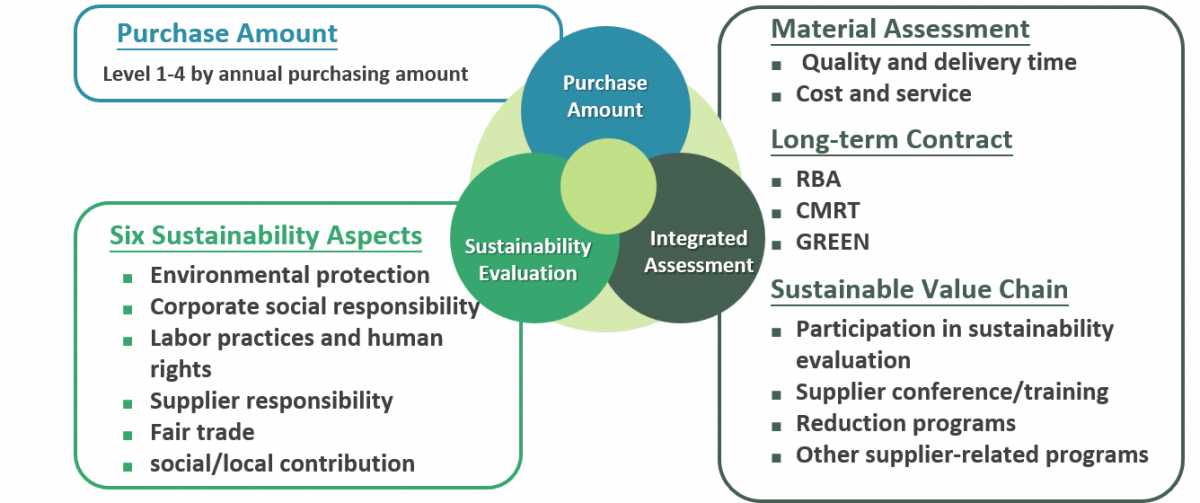
Supplier grading results will serve as a reference guide for procurement units. GIGABYTE has also established incentive and elimination mechanisms: new suppliers that fail the assessment must undergo a re-evaluation within 60 days after making improvements; if they still fail the re-evaluation, they will not be used. For suppliers that pass the assessment, they will undergo regular annual audits and be managed according to their grade; if they fail, they must make improvements within a specified timeframe and may be excluded from the supply chain if necessary.
2025 Supplier Classification Overview
| Tier | Pioneer | Excellence | Compliant | Transition | Total |
|---|---|---|---|---|---|
| Management Focus | Prioritize collaboration and include as a sustainability benchmark case | Maintain stable procurement and encourage to optimize sustainability performance | Recognize compliance with basic standards, assist in improving management precision | Implement guidance , conduct audits to ensure compliance with standards | |
| Key Suppliers | 10% | 9% | 4% | 9% | 32% |
| Non-key suppliers | 8% | 13% | 10% | 37% | 68% |
| Subtotal | 18% | 22% | 14% | 46% | 100% |
Supplier Risk Assessment
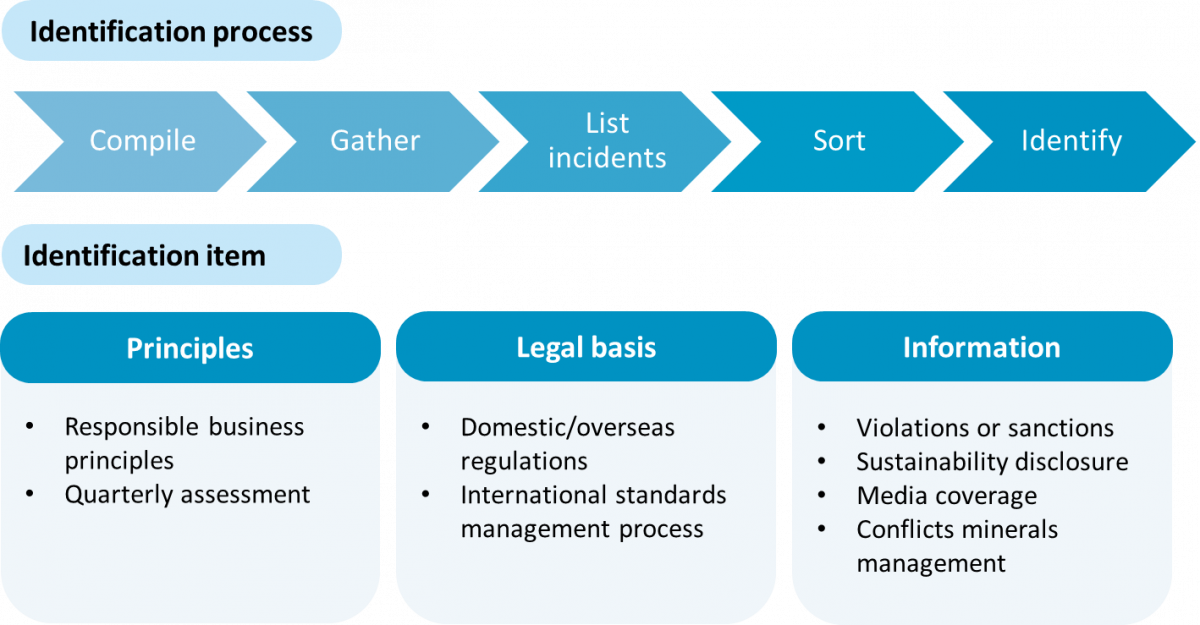
GIGABYTE conducts supplier high-risk assessments on the four aspects of society, environment, governance, and business every quarter based on the tiered supplier management system. Particular emphasis is placed on sanctions over labor, environment, financial transactions and conflict minerals among key suppliers; corporate governance evaluation, scope of ESG disclosure, and positive/negative media coverage are also added to the weighted matrix to identify and screen high-risk suppliers for that quarter. The outcomes are provided to the relevant personnel at each BU and subsidiary to ask for supplier improvements.
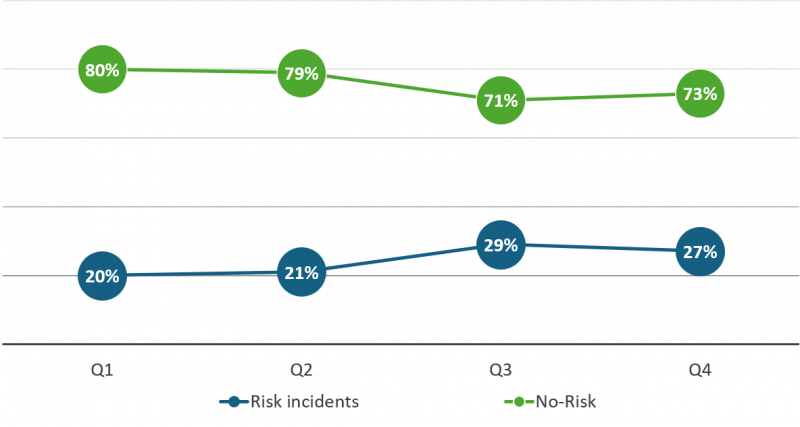
In the first quarter of 2025, 19% of suppliers experienced high-risk incidents. Although this figure rose slightly to 29% by the third quarter, following notifications and follow-up improvements, the proportion of suppliers with risk incidents dropped to 27% by the fourth quarter. We will continue to request assistance from business groups to track suppliers with risk incidents, while also implementing an alert mechanism in the procurement system and strengthening supplier management.
Change in Supplier Risk Assessment
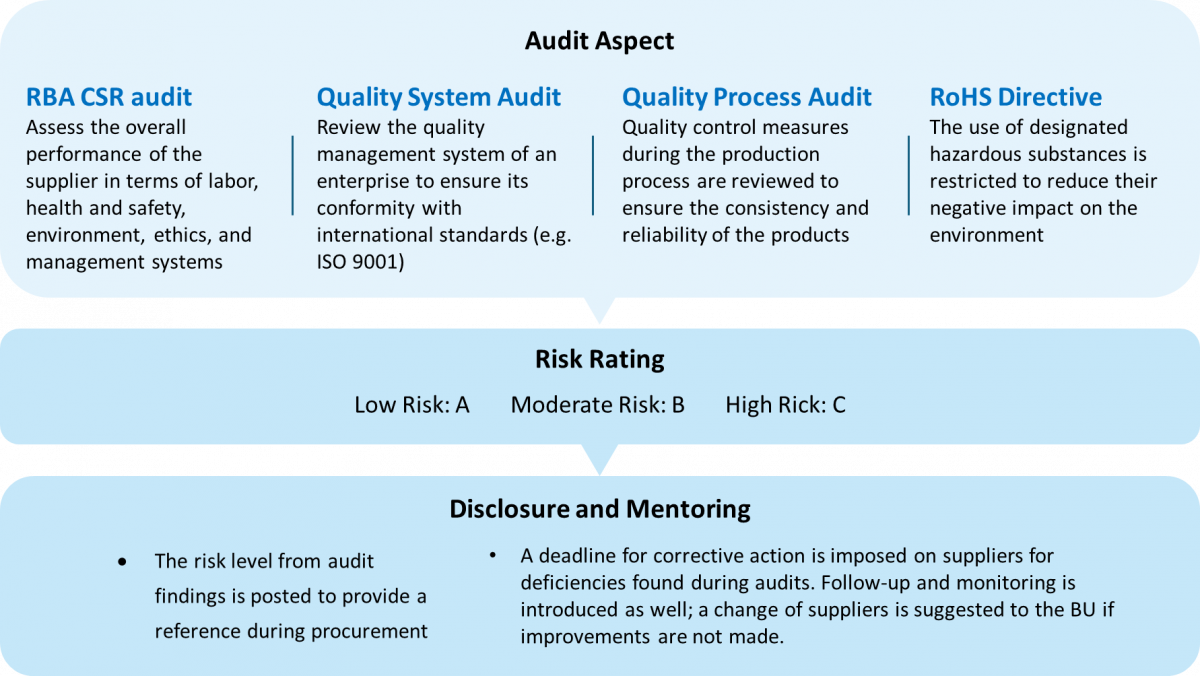
Supplier Audit Plan
To effectively mitigate the potential negative impacts of supply chain risks, while addressing stakeholder concerns and sustainability disclosure requirements, GIGABYTE has established a supplier quality system audit and a RBA risk tracking model. These have been progressively implemented across business groups and subsidiaries, with audit results regularly compiled and reported, and incorporated into the companyʼs procurement decision-making process. For suppliers with audit findings, GIGABYTE requires them to make improvements within a specified timeframe and to develop corrective actions and measures addressing the audit deficiencies. If improvements are not made, the business group is advised to seek alternative suppliers.
GIGABYTE conducts annual spot checks and audits of qualified new suppliers. It also establishes an annual audit schedule and defines the types of suppliers to be audited and the frequency of spot checks to ensure the quality of the risk tracking mechanism. In 2025, audits were conducted on a total of 138 suppliers. The audit results showed that 100% of existing suppliers and 86% of new suppliers were classified as low-risk; among the new suppliers, 3 were initially assessed as medium-risk, but after follow-up reviews and improvements, all were reclassified as low-risk, achieving a 100% improvement rate; one high-risk supplier has been removed from the current supplier list .
2025 supplier audit findings
Audit Information:
Audit Methods:
|
Major deficiencies | Improvement Tracking |
|---|---|---|
| QSA Quality System Audit:
Protective measures not implemented, which may lead to component damage, reduced yield rates, and latent failure issues |
Supplier has implemented protective measures and improved SOP procedures |