
Natural capital is one of the key resources for corporate operations, and various operational activities interact with and influence natural ecosystems. GIGABYTE has long been concerned with environmental issues and is committed to taking action within its own operations to prevent operational activities from harming biodiversity. At the same time, in response to the “Zero Deforestation by 2050” initiative and to achieve the vision of “Zero Net Loss of Nature and Positive Net Benefits,” the company has established the “ Biodiversity and No Deforestation Commitment” as a guiding principle for promoting biodiversity management.
Value Chain Operational Sites and Biodiversity Conservation Areas
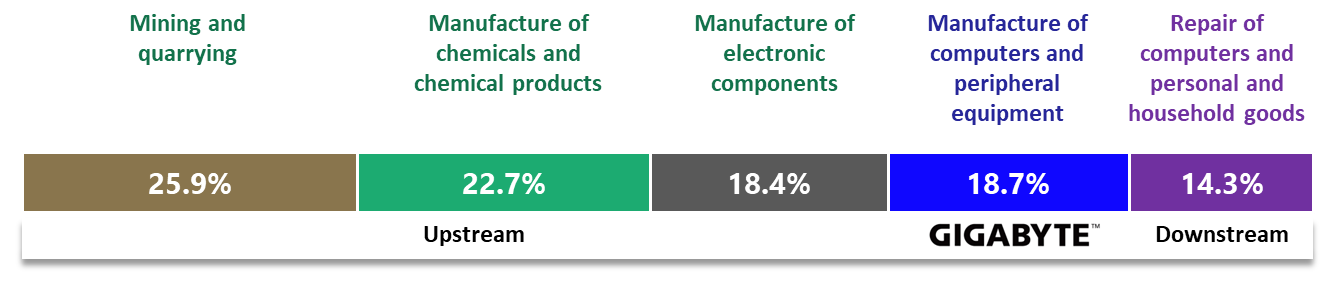
GIGABYTE utilized the IUCNʼs definition of protected areas to conduct an overlay analysis of its own operational sites, top 100 suppliers, upstream smelters, and downstream service locations. The results showed that GIGABYTEʼs own operational sites, overseas affiliates, the operational sites of its top 100 suppliers, and downstream after-sales service locations are not directly located within protected areas. To deepen our protection of surrounding ecosystems, GIGABYTE further centered the analysis on our operational sites in Taiwan and extended the analysis radius outward by 2 to 10 kilometers. Through this risk screening, we aim to identify potential indirect impacts and ecological dependencies, thereby establishing corresponding preventive measures or environmental education initiatives to address potential impacts. At the same time, we have traced back to smelters further upstream in the value chain to examine their overlap with ecological conservation areas. Analysis results indicate that approximately 5% of smelters may be at risk of being located within ecological conservation areas.
GIGABYTEʼs operational sites in Taiwan and downstream

GIGABYTE affiliatesʼ operational sites in the Asia-Pacific region

GIGABYTE affiliatesʼ operational sites in Europe and the Americas

Upstream Value Chain

Note:●Top 100 Supplies ●CMRT Smelters ●EMRT Smelters
Nature-Related Risk and Opportunity Management Strategy
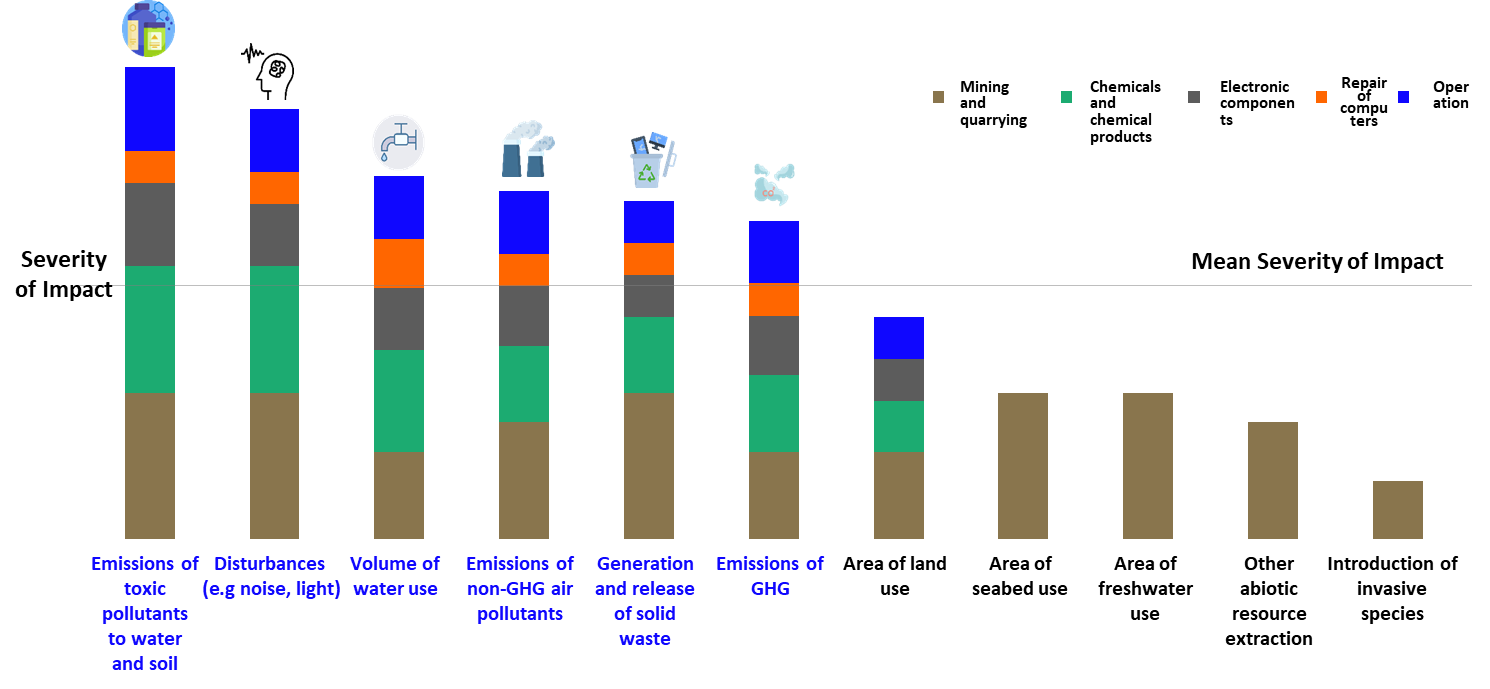
Transition Risks
| Risk | Expansion of hazardous substance regulations | Stricter air emission regulations | Tighter waste disposal regulations |
|---|---|---|---|
| Environmental Impact Factor | Emission of hazardous substances into soil and water | Non-GHG air pollution emissions | Generation and discharge of solid waste |
| Timeframe | Short-term | Long-term | Short-term |
| Impact Scope |
|
|
|
| Management Strategy |
|
Implement air emission monitoring and improvement |
|
| Risk | Ban on hazardous raw materials requiring alternatives |
|---|---|
| Environmental Impact Factor | Emission of hazardous substances into soil and water |
| Timeframe | Short to mid-term |
| Impact Scope |
|
| Management Strategy |
|
| Risk | Increased consumer awareness of product safety |
|---|---|
| Environmental Impact Factor | Emission of hazardous substances into soil and water |
| Timeframe | Short-term |
| Impact Scope | Operations: Enhance product verification and labeling to ensure safety |
| Management Strategy |
|
| Risk | Noise from manufacturing/testing affecting humans and wildlife |
|---|---|
| Environmental Impact Factor | Disturbances such as noise and light pollution |
| Timeframe | Short-term |
| Impact Scope |
|
| Management Strategy | Implement noise monitoring and improvement |
Physical Risks
| Risk | Soil/water pollution |
|---|---|
| Environmental Impact Factor | Emission of hazardous substances into soil and water |
| Timeframe | Mid-short term |
| Impact Scope |
|
| Management Strategy |
|
| Risk | Water scarcity | Smog and acid rain |
|---|---|---|
| Environmental Impact Factor | Volume of water use | Non-GHG air pollution emissions |
| Timeframe | Mid-term | Long-term |
| Impact Scope |
|
Upstream & Operations: Increased cost for cleanroom equipment |
| Management Strategy | Promote water resource management (e.g., conservation, reuse) |
|
Nature-Related Opportunities
| Opportunity | Rising demand for green products | Enhanced ESG ratings through positive brand image |
|---|---|---|
| Environmental Impact Factor | Hazardous substance emissions to soil/water | |
| Timeframe | Mid-Long term | Short-term |
| Impact Scope |
|
Operations: Conservation efforts help maintain ecosystem services of soil and water |
| Management Strategy | Invest in green product R&D and design |
|
| Opportunity | Growth of circular economy market |
|---|---|
| Environmental Impact Factor | Solid waste generation |
| Timeframe | Short-term |
| Impact Scope |
|
| Management Strategy | Develop circular economy services |
Biodiversity Management Strategy
GIGABYTE actively promotes biodiversity management, demonstrating its commitment to sustainable development. The strategy is built around four key pillars:
- Enhancing Operational Environmental Management – Monitoring and managing emissions related to manufacturing processes to reduce ecological disturbances.
- Implementing Product Stewardship – Promoting green design and recycling mechanisms to reduce environmental pollution from electronic waste.
- Managing Supplier Environmental Impact – Improving sustainability performance across the supply chain to build a sustainable value chain.
- Environmental Compensation Actions – Engaging in activities such as afforestation and habitat restoration to give back to nature.
Through diverse initiatives, GIGABYTE is committed to comprehensive biodiversity protection.
| Operational Environmental Management | Product Stewardship | Supplier Environmental Impact Management | Environmental Compensation Actions |
|---|---|---|---|
| Environmental Compensation Actions | Eco-Friendly Product | Supply Chain Management | The Ocean is Our Home |
| Climate Strategy and Risk Management | Raw Material Management | Tetralogy of Supply Chain Engagement | Make Earth Green Again |
| Hazardous Substance Management | Conflict Minerals Management | The Guanxi Blue Zone | |
| Circular Economy |