
To practice sustainable product management, GIGABYTE has established the “Sustainable Procurement Guidelines,” which have been signed and approved by the Chairman. We promote sustainable product design and manufacturing from the inside out, influencing more supplier partners to reduce their reliance on raw materials. Additionally, the “Sustainable Raw Materials Policy” is explicitly defined under these guidelines. Adhering to the principle of “procuring raw materials with minimal negative environmental impact,” the company commits to increasing the proportion of recycled and renewable materials and encourages component suppliers to use third-party certified materials while avoiding raw materials sourced from ecologically sensitive regions.
Five Commitments of the Sustainable Raw Materials Policy
- Procure raw materials with minimal negative environmental impact, and prioritize the procurement of third-party verified sustainable raw materials
- Product packaging shall comply with relevant laws and regulations, and we will implement a plan to reduce product packaging and incoming packaging materials, with the goal of phasing out single-use packaging materials by 2030
- Proactively disclose environmental information regarding the organization and its products, while promoting suppliersʼ responsibility for disclosure
- Proactively promote sustainability-related issues, such as social and environmental management, to upstream suppliers
- Collaborate with external stakeholders to advance sustainable raw material initiatives and create sustainable products
Sustainable Raw Material Management Targets
| Substances of Concern | 2025 Targets | 2030 Targets | ||
|---|---|---|---|---|
| Target Description | 2025 Progress | Target Description | Progress Rate | |
|
Recycled Metal |
Introduction of Recycled Metals (including PIR) | ✅Achieved 3.74 metric tons of recycled metal used |
Recycled metal used in components reaches 20 metric tons/year (including PIR) | Progress Rate 18.70% |
| Recycled Plastic | Products Introduction of Recycled Plastic | ✅Achieved
|
Recycled plastic content reaches 15% in components weighing over 25g across in-house laptop models. | Progress Rate 5.13% |
Note1:The scope of the inventory includes motherboards, graphics cards, servers, and laptops, with statistics based on representative models.
Note2: PIR (Post-Industrial Recycled) refers to materials recovered and reused from manufacturing scraps or offcuts.
Low-Carbon Server Initiative
Sustainability Highlights:
- Chassis structural components utilize 20% pre-consumer recycled low-carbon metal materials
- Airflow shrouds and hard drive trays use up to 95% PCR polycarbonate or PC+ABS plastic
- Heat sinks use 100% PCR aluminum
【Official Website】Low-Carbon Server Initiative
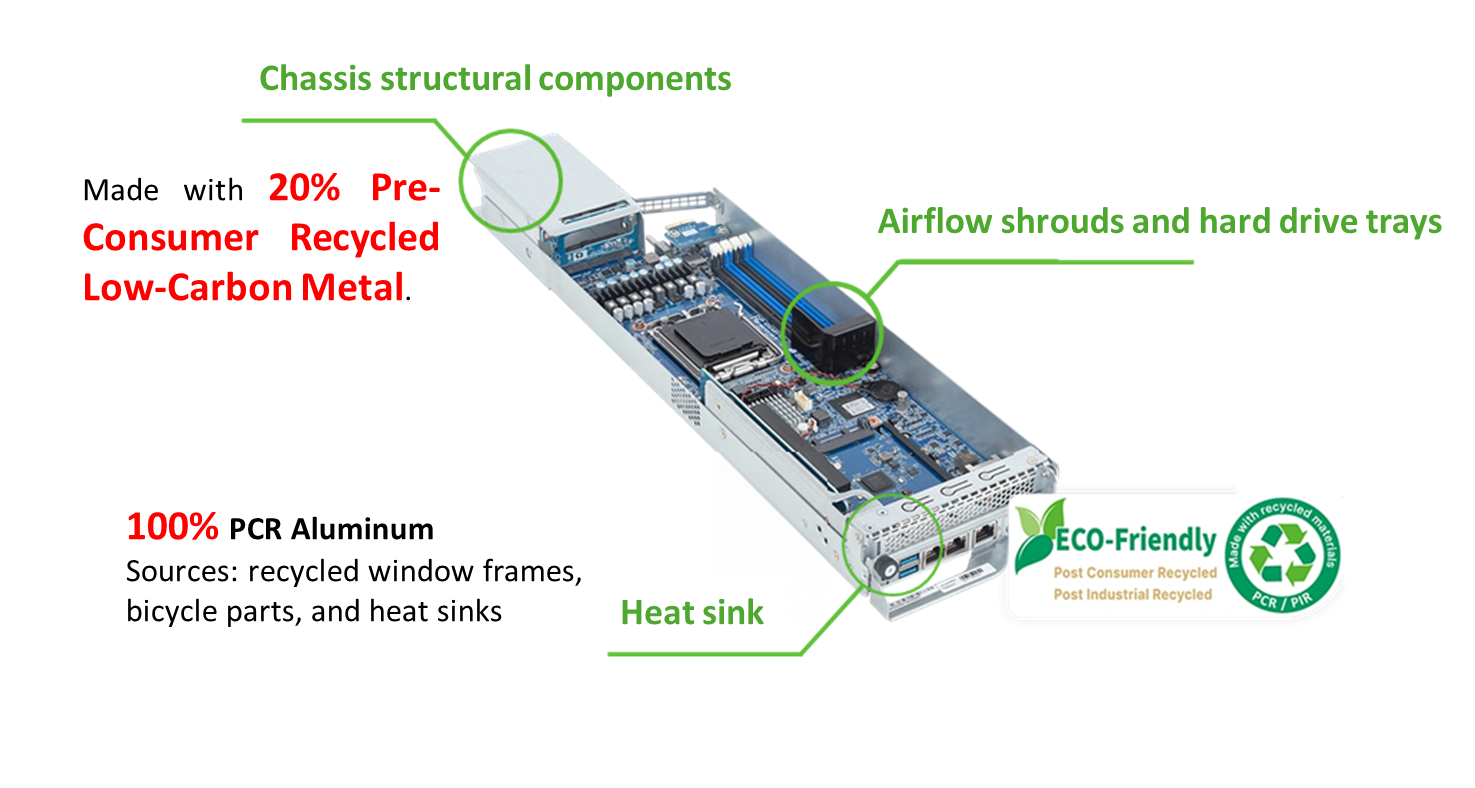
Note1: PCR (Post-Consumer Recycled) refers to recycled material obtained from the recycling system after the end-of-life of the final product
Note2: PC+ABS plastic refers to a composite plastic combining polycarbonate (PC) and acrylonitrile butadiene styrene (ABS)
Product recyclability
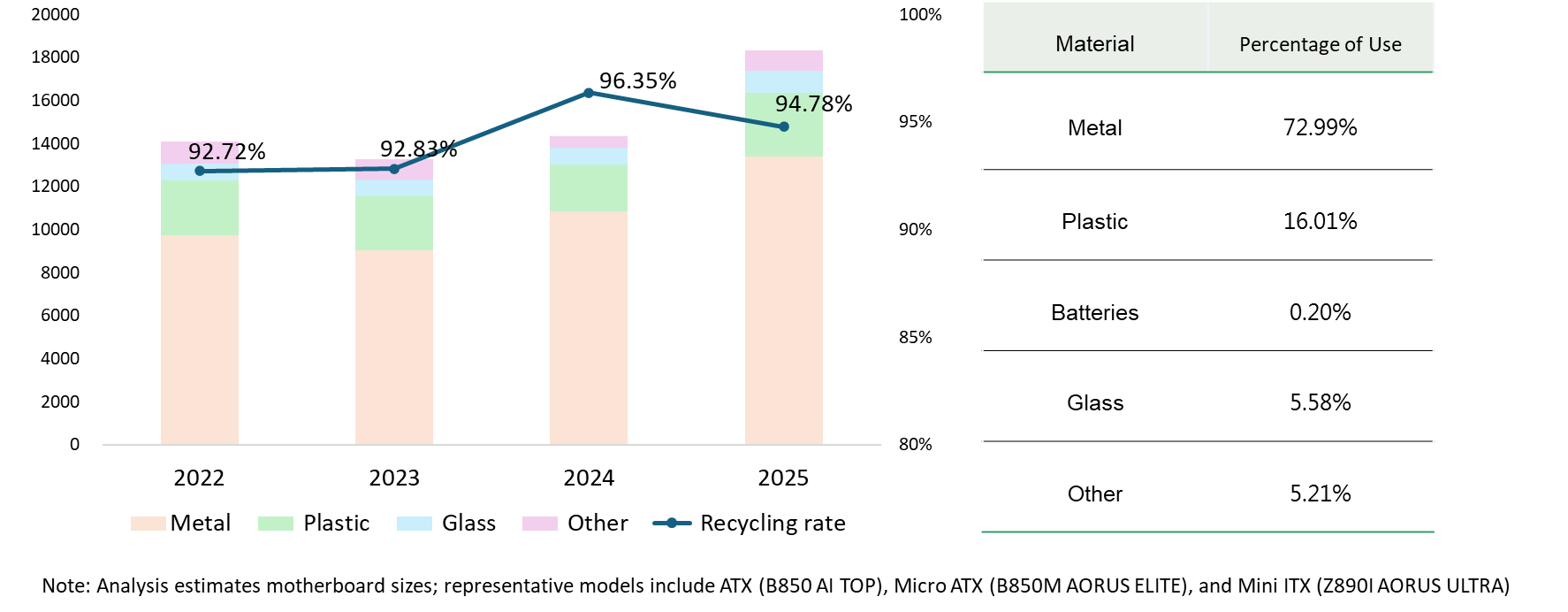
In addition to promoting circular economy business models and strengthening end-of-life recycling, GIGABYTE is also committed to increasing the proportion of reusable materials in its products year by year to reduce the environmental impact caused by products at the end of their lifecycle. The raw materials used in GIGABYTEʼs motherboard products are primarily metals and plastics, totaling 13,408.27 metric tons of metal, 2,940.90 metric tons of plastic, 1,025.82 metric tons of glass, and 994.93 metric tons of other materials. The average recyclability rate of product materials in 2025 is 94.78 %.
- Home
- Innovation Management
- Product Energy Efficiency Management
- Product Packaging Management
- Raw Material Management
- The Guanxi Blue Zone
- The Ocean is Our Home
- From the Chairman
- Commitment to CSR
- Stakeholder Engagement
- Material Topics
- SDGs
- Corporate Organization
- Code of Conduct
- Information Security & Privacy
- Risk Management
- Supply Chain Management
- Tetralogy of Supply Chain Engagement
- Conflict Mineral
- Environmental Management Policy
- Brand Strategy and Business Reputation Management
- Climate Strategy and Risk Management
- Customer Relations Management
- Eco-friendly Product
- Hazardous Substance Management
- Biodiversity
- Circular Economy
- Green Action
- Sustainability/Environmental Education
- Green Activities
- Working Holiday
- Corporate Volunteering
- Go Green Taiwan
- Make Earth Green Again
- Tree Map
- Overview/Core Concept
- Rooftop Farm
- Ecology Photo Competition
- Resource Hub
- Diverse and Inclusive Workplace
- Talent Management
- Human Rights Management
- Talent Cultivation and Development
- Occupational Safety
- Health Care
- Upgrade Your Life
- Social Inclusion
- CSR Milestone
- Economic Aspect
- Environmental Aspect
- Social Aspect
- CSR Report