
GIGABYTE has introduced various innovative materials, technologies, and meticulous management mechanisms at various stages of the product life cycle in order to facilitate the outstanding performance of the product with high efficiency and stable durability. Moreover, the design stage takes circular economy as its core, it will contribute to moving towards our zero-waste goal.
Design of High-Performance and High-Efficiency Products
After launching the Ultra Durable Motherboard in 2007, GIGABYTE progressively introduced innovative technologies such as energy-saving switches, 2X copper PCBs, and high current capable components that boosted motherboard stability and extended product service life. The latest Smart Fan 5 and Water Force water-cooling technologies provide a major boost to graphics card performance. In addition, GIGABYTE took the lead in supporting CEC 2019 (California Energy Commission device energy efficiency standards) by using high-quality hardware and a fine-tuned BIOS design to lower the power consumption even more. GIGABYTE is continuing to apply for more international energy efficiency certifications to improve the credibility of energy-saving data and provide consumers with comprehensive protection.
GIGABYTE Eco-Friendly Technique Development

2006
All-Solid-State Capacitor Motherboard
All-solid-state capacitor design extends product service life.

2007
2nd Generation Ultra Durable Motherboard
Effectively reduce power loss and operating temperature.

2008
Dynamic Energy Saver
Enable or disable Dynamic Energy Saver at the touch of a button.

2009
Ultra Durable™ 3rd Motherboard
2 oz pure copper PCB layer dissipates motherboard heat and reduces temperature more effectively.

2010
24-Phase Power Design
Improve heat dissipation and effective power distribution.

2011
Ultra Durable™ 4th Motherboard
Executive features prevent PC malfunction due to environmental issues.

2012
Ultra Durable™ 5th Motherboard
The use of components with ultra-high resistance provides up to 95% power conversion efficiency, low power consumption, low heat, and a longer lifetime.

2013
Ultra Durable™ 5th Plus Technology
Integration of high-quality components and efficient energy-saving function provides high-performance system operation, lower heat, and extends motherboard lifespan.

2014 / 2015
Ultra Durable Motherboard
Strengthen heat dissipation of motherboard in order to achieve high performance and stability at low temperature while the system works at full capacity and maximum frequency.

2016
Smart Fan 5 Cooling Solution
Improve motherboard temperature monitoring and cooling to reduce the amount of time that computer components spend at high temperatures and extend their service life.

2017
Anti-sulfur
Grant the ultra-durable motherboards brand-new values with the proprietary anti-sulfur technique. It can prevent the sulfide in the air from penetrating the built-in resistor of the motherboards and causing short circuits.
2019
Early Adopter of CEC 2019
With higher efficiency, higher quality hardware materials, and carefully calibrated BIOS, GIGABYTE motherboards consume less power in standby mode when compared with other products.
2020
Extreme Waterforce Thermal Design
Extreme waterforce motherboards use all-in-one water-cooling monoblock that covers both CPU, VRM, SSD, and PCH areas. The design ensures stability, low temperature, and noise avoidance under full loading application and gaming.
2021
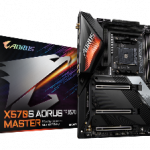
Fanless Chipset Design
The reconfiguration of hardware circuitry and enlargement of chip heatsinks allowed the entire chipset to be upgraded to a fanless cooling design. This not only solves the problem of fan noise but also helps to avoid the tendency for passive cooling systems to become clogged by dust.
2022
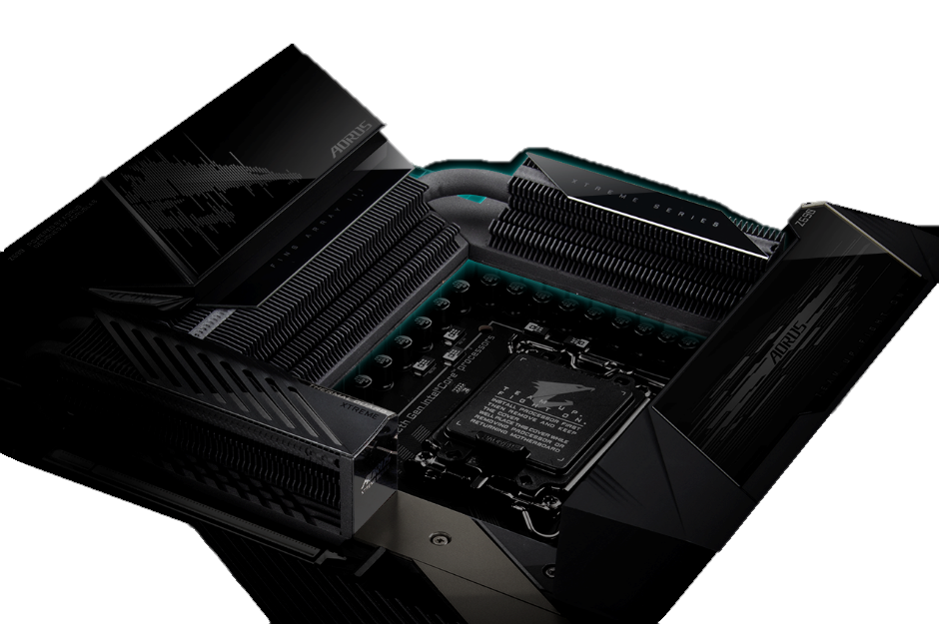
Gen 3 Fins-Array Design
The all-new 3rd generation Fins-Array provides extreme cooling performance through irregular extended fins that provide nine times the cooling surface than conventional heatsink designs. The increase in heat exchange surface delivers optimal thermal transfer and waste heat conversion.
2023
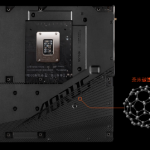
NanoCarbon Baseplate
The motherboard bottom is equipped with a nano-carbon coating back plate with high thermal conductivity. It can transfer the waste heat generated by the PWM components to the heat dissipation back plate through the heat pipe, and use the nano-carbon coating with excellent thermal conductivity to quickly cool down. The overall heat dissipation performance is enhanced from the back, effectively reducing the temperature of the PWM components on the back of the PCB by 10%.
2024
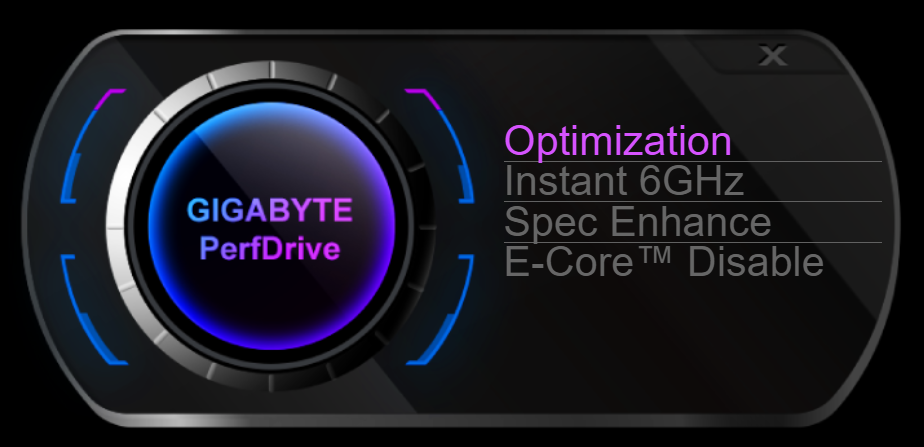
PerfDrive echnology
Exclusive PerfDrive technology from GIGABYTE motherboards allows processors to balance performance and temperature perfectly. It integrates with a number of GIGABYTE′s exclusive BIOS settings to allow users to maintain high performance while using the processor at lower temperatures and less energy consumption.

2025
AORUS AI SNATCH
AORUS AI SNATCH utilizes neural network models to analyze hardware configurations in real time, automatically generating optimized memory overclocking profiles. This precise AI tuning boosts computing speed and shortens processing times, thereby reducing overall power consumption. Delivering exceptional performance through an eco-friendly and energy-efficient design, it actively contributes to global sustainability.
2026
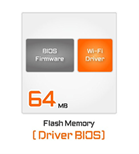
DriverBIOS
DriverBIOS pre-integrates Wi-Fi drivers directly into the BIOS chip, enabling immediate internet connectivity upon boot-up without the need for additional CDs or USB drives. This innovative design eliminates the requirement for physical media, lowering carbon emissions from manufacturing and transportation while preventing electronic waste. It embodies an eco-friendly, digital approach to supporting planetary sustainability
Green Data Center Solutions
In response to the growing demand for data centers from all sectors, GIGABYTE began assisting customers with deploying different types of immersion cooling data centers in 2021. Our solutions have since won praise from academic, scientific research, government, and industry customers. Investment and support for immersion cooling computing solutions were further expanded in 2022 with the introduction of off-the-shelf, turn-key single-phase immersion cooling computing solutions that offer advantages such as breakthrough cooling performance, high-performance computing, mobile deployment, and high scalability. Our solution effectively reduces energy consumption and helps users realize the net zero carbon emissions goal.
For more information on system cooling solutions, please refer to the GIGABYTE website.
Direct Liquid Cooling
One-Phase Immersion Cooling Solution
Two-Phase Immersion Cooling Solution
Disclosure of Product Environmental Impact
Transparency regarding product environmental impact data is a manufacturerʼs obligation to consumers. GIGABYTE leads the industry by disclosing Life Cycle Assessments (LCA) for four major product series using the methodology of the International Reference Life Data System (ILCD) and continues to expand the scope of product environmental impact assessments. Since 2020, our product environmental reports have included impact analyses for 16 environmental indicators. We aim to promote responsible production and sustainable consumption through more transparent product disclosures, and to date, we have published a total of 117 product environmental reports.
Furthermore, GIGABYTE is deeply committed to green manufacturing and adopted the ISO 14051:2011 Material Flow Cost Accounting (MFCA) management system as early as 2018. This system systematically breaks down data on material inputs, product outputs, and energy consumption during the production process to track “material flows” and “energy flows” in product manufacturing. By applying this approach to product environmental impact assessments, the company identifies critical points of resource depletion, enabling management optimization and technological innovation in high-energy-consumption or high-waste-generation stages.
Product Environmental Report
| Version | Year Adopted | Disclosed Environmental Impact (based on EU Product Environmental Footprint (PEF)) | Additional Information |
|---|---|---|---|
| Version 1 | 2018 | 3 impacts: greenhouse gases; suspended particles; terrestrial/aquatic acidification | |
| Version 2 | 2019 | 12 impacts: climate change; ionizing radiation; particulate matter; ozone depletion; photocatalytic ozone formation; mineral, fossil, and raw resource depletion; acidification; freshwater eutrophication; terrestrial eutrophication; freshwater ecotoxicity; human toxicity (cancer effects); human toxicity (non-cancer effects) | |
| Version 3 | 2020–present | 16 impacts: climate change; particulate matter; ozone depletion; water use; freshwater eutrophication, marine eutrophication; resource use (energy carriers); resource use (minerals and metals); land use; terrestrial eutrophication; photochemical ozone formation; acidification; freshwater ecotoxicity; human toxicity (cancer effect), human toxicity (non-cancer effect); ionizing radiation | Composition and recycling ratios of the materials used in the product and packaging |
- Home
- Innovation Management
- Product Energy Efficiency Management
- Product Packaging Management
- Raw Material Management
- The Guanxi Blue Zone
- The Ocean is Our Home
- From the Chairman
- Commitment to CSR
- Stakeholder Engagement
- Material Topics
- SDGs
- Corporate Organization
- Code of Conduct
- Information Security & Privacy
- Risk Management
- Supply Chain Management
- Tetralogy of Supply Chain Engagement
- Conflict Mineral
- Environmental Management Policy
- Brand Strategy and Business Reputation Management
- Climate Strategy and Risk Management
- Customer Relations Management
- Eco-friendly Product
- Hazardous Substance Management
- Biodiversity
- Circular Economy
- Green Action
- Sustainability/Environmental Education
- Green Activities
- Working Holiday
- Corporate Volunteering
- Go Green Taiwan
- Make Earth Green Again
- Tree Map
- Overview/Core Concept
- Rooftop Farm
- Ecology Photo Competition
- Resource Hub
- Diverse and Inclusive Workplace
- Talent Management
- Human Rights Management
- Talent Cultivation and Development
- Occupational Safety
- Health Care
- Upgrade Your Life
- Social Inclusion
- CSR Milestone
- Economic Aspect
- Environmental Aspect
- Social Aspect
- CSR Report